When most people picture a commercial fitout, they picture what goes in, things like new joinery, fresh paint and a reception desk that finally makes sense. What rarely comes up is what happens to everything that comes out, the old carpet, old partitions and old fixtures that get stripped away to make room for it all. It is the part of the job nobody gets excited about, which is exactly why it is worth talking about.
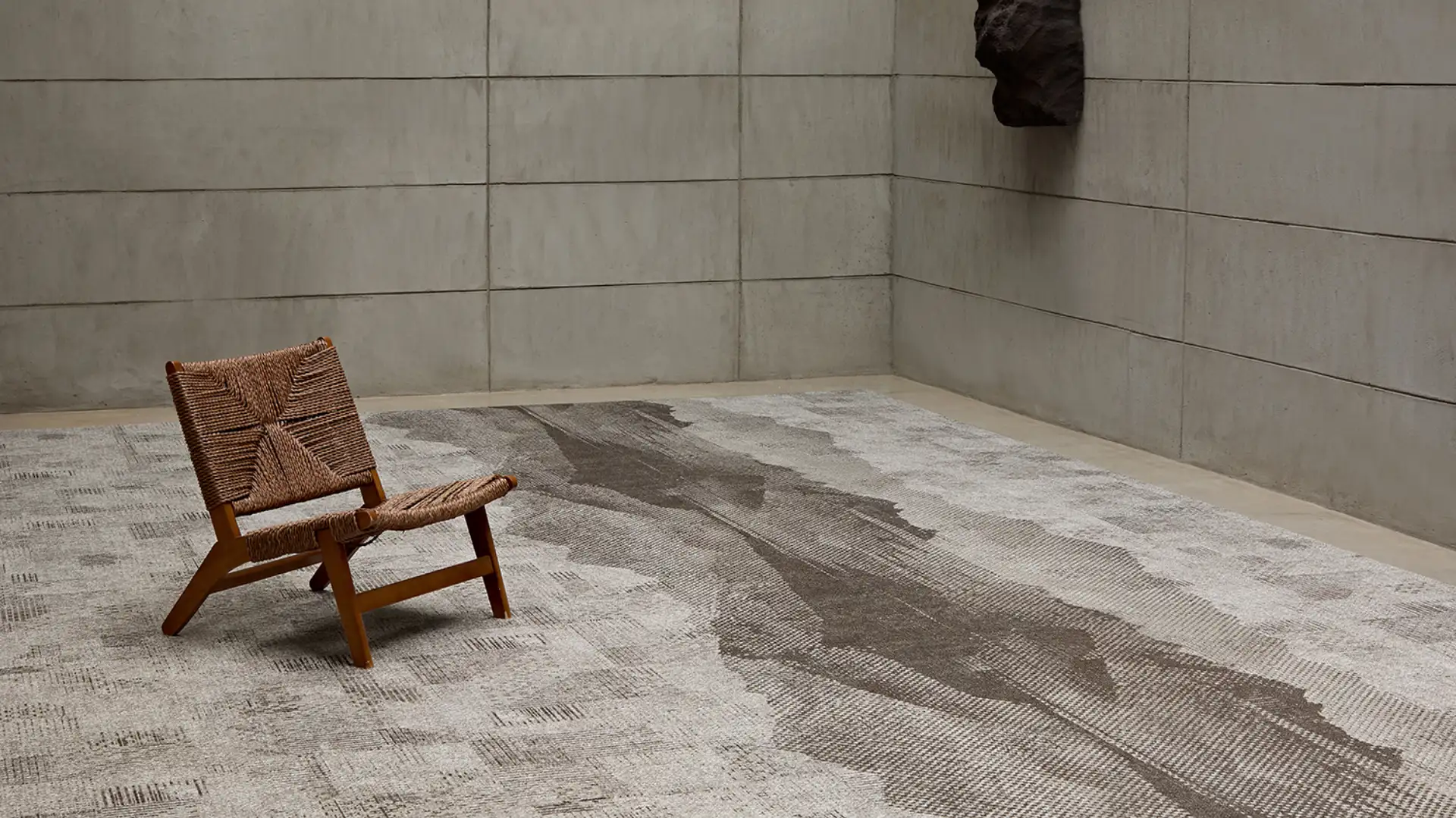
On a recent make good project in Robina, we installed Milliken carpet tiles as part of the fitout, and it got us thinking about a question that rarely comes up on site. Not what happens when carpet goes in, but what happens years from now when it eventually comes out. So we went looking for the answer, starting with the supplier whose product we had just installed.
The problem with old carpet
Carpet is not simple to deal with once it is finished being carpet, since it is made up of layered materials, fibre on top, backing underneath and sometimes adhesive holding it all together. That layering is exactly what makes it hard to break down, and unlike timber or steel, you cannot just separate it out and send the parts off to be reused. Without an established recycling pathway, landfill becomes the path of least resistance, and that is where most commercial carpet still ends up. It is simply how the system has worked for a long time but systems can change, and in this case, the supplier had already done the work of building a better one.
Working with Milliken on a different approach
The carpet tiles in Robina were supplied by Milliken, who run a program called N/XT Life Circularity Program, built around three straightforward ideas: reduce, reuse and recycle. We reached out to their team to understand how it works in practice, and the answer held up.
Reduce starts before a tile ever reaches site, with Milliken building their carpet using recycled yarn and backing from the outset, which cuts down the amount of new material required in the first place. It is a decision made at the manufacturing stage, long before a project like ours is ever involved.
Reuse comes into play once carpet is removed from a space. Rather than assuming every tile is finished, Milliken works with local partners who collect Milliken used carpet and, where it still has usable life left, resell or donate it instead of sending it straight to waste, an idea that most of the industry has never bothered to set up properly.
Recycle is one of the industry’s greatest challenges but also where the circular journey continues. Within N/XT Life Circularity Program, Milliken partners with saveBOARD to transform recovered carpet waste into Renasci, a resilient flooring solution, made from 80% reclaimed carpet waste and 20% soft plastics waste. Rather than separating materials or sending them to landfill, the entire carpet waste stream becomes a resource, creating a new pathway for materials to remain in use. The result is a continuous circular loop: Recover. Reprocess. Manufacture. Install. Recover. Recycle.
Why this matters beyond one project
Most fitouts happen without anyone thinking twice about what occurs at the other end of a product’s life. It is an easy thing to overlook, since the work is technically done once the space is handed back. But asking the question anyway, even on a straightforward make good, tends to reveal more than expected about how a supplier actually operates.
For Brisbane business owners, facilities managers and property developers, sustainability credentials are becoming less of a nice to have and more of a genuine question during procurement, and being able to say exactly where materials come from and exactly where they go is a real point of difference. It also reflects the kind of partnerships we choose to work with, since suppliers like Milliken who have invested in solving problems most of the industry has ignored are the ones worth building long term relationships with.
None of this requires a bigger budget or a longer program. It simply requires choosing suppliers who have already done the hard work, and asking the right questions before a project starts rather than after it finishes.
A small shift with a real impact
The Robina project was a straightforward make good, and a good reminder that even the smaller jobs are worth a closer look. It is what prompted us to ask what happens further down the line, and it turns out the supplier had already done the hard part.
If you are planning a fitout and want to understand what your material choices actually mean once the project is finished, we are happy to talk it through.
Visit phoenixci.com.au or call 0488 488 319 to start the conversation.